Catalyzing Africa's Sustainable Transition催化非洲可持续转型催化非洲可持續轉型아프리카의 지속가능한 전환 촉진تحفيز التحول المستدام في أفريقيا
Insights to Impact a Climate-Resilient Future洞见气候韧性未来洞見氣候韌性未來기후 회복력 있는 미래를 위한 인사이트رؤى لإحداث أثر نحو مستقبل قادر على الصمود في وجه تغير المناخ
Casablanca Finance City (CFC) · May 2025卡萨布兰卡金融城(CFC) · 2025 年 5 月卡薩布蘭卡金融城(CFC) · 2025 年 5 月카사블랑카 파이낸스 시티(CFC) · 2025년 5월القطب المالي للدار البيضاء (CFC) · مايو 2025
Download PDF下载 PDF下載 PDFPDF 다운로드تنزيل ملف PDF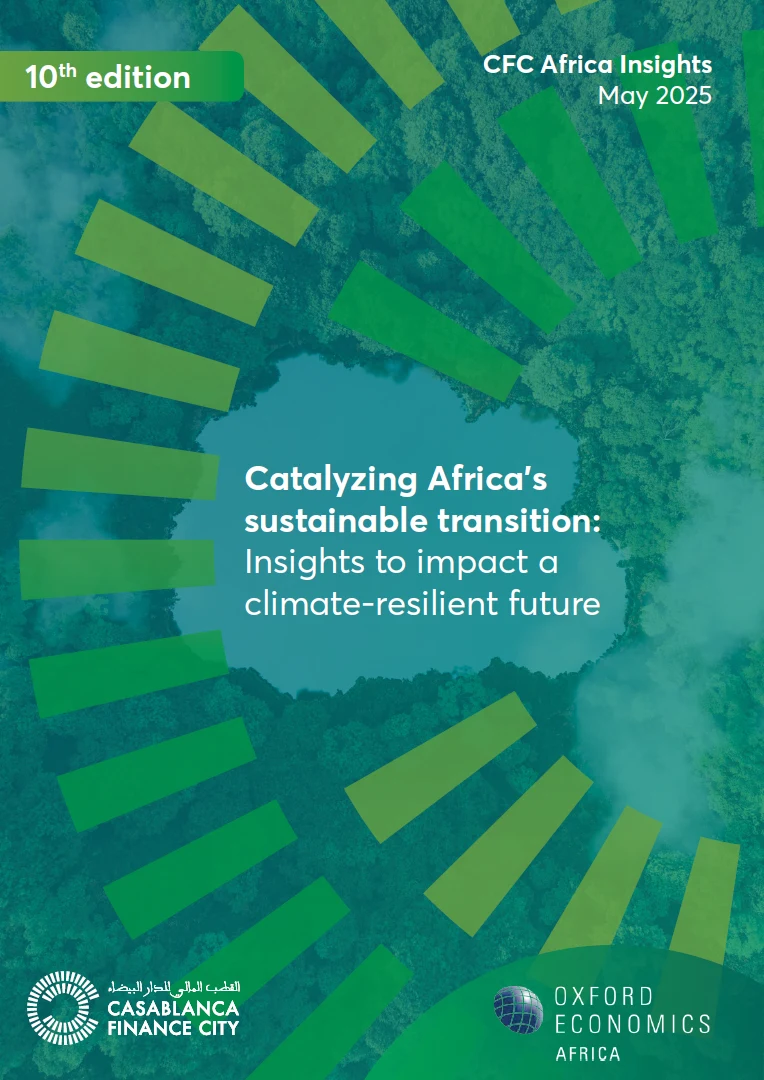 Download PDF下载 PDF下載 PDFPDF 다운로드تنزيل ملف PDF
 Publication Details出版物详情出版物詳情간행물 정보تفاصيل المنشور
- Publisher出版方出版方발행 기관الناشر
- Casablanca Finance City (CFC)卡萨布兰卡金融城(CFC)卡薩布蘭卡金融城(CFC)카사블랑카 파이낸스 시티(CFC)القطب المالي للدار البيضاء (CFC)
- In collaboration with合作编制合作編製협력 기관بالتعاون مع
- Oxford Economics Africa牛津经济研究院非洲牛津經濟研究院非洲Oxford Economics AfricaOxford Economics Africa
- Type类型類型유형النوع
- CFC Africa Insights, 10th EditionCFC非洲洞察,第10期CFC非洲洞察,第10期CFC 아프리카 인사이트, 제10판CFC Africa Insights، الطبعة العاشرة
- Date日期日期날짜التاريخ
- May 20252025 年 5 月2025 年 5 月2025년 5월مايو 2025
- Pages页数頁數페이지عدد الصفحات
- 8888888888
About Casablanca Finance City关于卡萨布兰卡金融城關於卡薩布蘭卡金融城카사블랑카 파이낸스 시티 소개نبذة عن القطب المالي للدار البيضاء
Casablanca Finance City (CFC) is Morocco's international financial hub, established to develop Casablanca as a leading gateway for investment into Africa, hosting regional headquarters of financial institutions, multinationals and professional services firms operating across the continent.卡萨布兰卡金融城(CFC)是摩洛哥的国际金融枢纽,旨在将卡萨布兰卡发展为通往非洲投资的重要门户,汇聚了众多在非洲大陆运营的金融机构、跨国企业及专业服务公司的区域总部。卡薩布蘭卡金融城(CFC)是摩洛哥的國際金融樞紐,旨在將卡薩布蘭卡發展為通往非洲投資的重要門戶,匯聚了眾多在非洲大陸運營的金融機構、跨國企業及專業服務公司的區域總部。카사블랑카 파이낸스 시티(CFC)는 모로코의 국제금융 허브로, 카사블랑카를 아프리카 투자의 선도적 관문으로 육성하기 위해 설립되었으며, 아프리카 대륙 전역에서 활동하는 금융기관, 다국적 기업, 전문서비스 기업의 지역 본부가 자리하고 있다.القطب المالي للدار البيضاء (CFC) هو المركز المالي الدولي للمغرب، أُنشئ لتطوير الدار البيضاء بوصفها بوابة رائدة للاستثمار في أفريقيا، ويستضيف المقار الإقليمية للمؤسسات المالية والشركات متعددة الجنسيات وشركات الخدمات المهنية العاملة في أنحاء القارة.
casablancafinancecity.com →casablancafinancecity.com →casablancafinancecity.com →casablancafinancecity.com →casablancafinancecity.com ←Abstract摘要摘要초록الملخص
Published as the 10th edition of the CFC Africa Insights series and produced in collaboration with Oxford Economics Africa, this report examines the state and potential of sustainable finance across the continent. It finds that although Africa contributes less than 3.0% of global greenhouse gas emissions, it is among the regions most vulnerable to climate shocks, and requires at least US$190 billion in climate finance annually while receiving less than US$55 billion a year — just 3.3% of the global total, with nearly half of that concentrated in just 10 countries. Public sources, chiefly multilateral development finance institutions, dominate these flows, while private finance remains marginal but growing, and adaptation efforts in particular remain badly underfunded.本报告作为CFC非洲洞察系列的第10期,由牛津经济研究院非洲合作编制,聚焦分析非洲大陆可持续金融的现状与发展潜力。报告指出,尽管非洲对全球温室气体排放的贡献不足3.0%,却是气候冲击最脆弱的地区之一,每年至少需要1900亿美元气候融资,但实际获得的资金却不足550亿美元,仅占全球总量的3.3%,其中近一半资金还集中流向仅10个国家。这些资金流入以多边开发性金融机构为主的公共资金来源为主导,私营部门融资虽仍处边缘地位但正在稳步增长,尤其是适应性举措的资金缺口尤为严重。本報告作為CFC非洲洞察系列的第10期,由牛津經濟研究院非洲合作編製,聚焦分析非洲大陸可持續金融的現狀與發展潛力。報告指出,儘管非洲對全球溫室氣體排放的貢獻不足3.0%,卻是氣候衝擊最脆弱的地區之一,每年至少需要1900億美元氣候融資,但實際獲得的資金卻不足550億美元,僅佔全球總量的3.3%,其中近一半資金還集中流向僅10個國家。這些資金流入以多邊開發性金融機構為主的公共資金來源為主導,私營部門融資雖仍處邊緣地位但正在穩步增長,尤其是適應性舉措的資金缺口尤為嚴重。CFC 아프리카 인사이트 시리즈 제10판으로 발간되고 Oxford Economics Africa와 협력해 작성된 이 보고서는 아프리카 대륙 전반의 지속가능금융 현황과 잠재력을 살펴본다. 보고서에 따르면 아프리카는 전 세계 온실가스 배출량의 3.0% 미만을 차지하지만 기후 충격에 가장 취약한 지역 중 하나이며, 연간 최소 1,900억 달러의 기후금융이 필요한 반면 실제로 받는 금액은 연간 550억 달러에 못 미친다. 이는 전 세계 총액의 3.3%에 불과하며, 그 절반 가까이가 단 10개국에 집중되어 있다. 이러한 자금 흐름은 다자개발금융기관을 중심으로 한 공공 재원이 주도하고 있고, 민간 금융은 미미하지만 증가하는 추세이며, 특히 기후 적응 부문은 여전히 심각한 자금 부족 상태에 있다.يتناول هذا التقرير، الصادر بوصفه الطبعة العاشرة من سلسلة CFC Africa Insights والمُعدّ بالتعاون مع Oxford Economics Africa، واقع التمويل المستدام وإمكاناته في أنحاء القارة. ويخلص إلى أنه على الرغم من أن أفريقيا تسهم بأقل من 3.0% من انبعاثات غازات الدفيئة العالمية، فإنها من بين أكثر المناطق عرضة للصدمات المناخية، وتحتاج إلى ما لا يقل عن 190 مليار دولار أمريكي سنوياً من التمويل المناخي، في حين تتلقى أقل من 55 مليار دولار أمريكي سنوياً — أي 3.3% فقط من الإجمالي العالمي، يتركز نحو نصفها في 10 دول فقط. وتهيمن المصادر العامة، ولا سيما مؤسسات تمويل التنمية متعددة الأطراف، على هذه التدفقات، بينما يظل التمويل الخاص هامشياً وإن كان في تزايد، ولا تزال جهود التكيّف على وجه الخصوص تعاني من نقص حاد في التمويل.
The report identifies five business opportunity areas that can catalyse sustainable and inclusive growth: environmentally sustainable energy systems (needed to connect around 600 million Africans currently without electricity access); the blue economy, which contributes roughly US$300 billion to Africa's economy and supports nearly 50 million jobs; climate-smart agriculture, given more than 95% of the continent's agriculture is rain-fed despite Africa holding a quarter of the world's arable land; climate-resilient infrastructure; and critical mineral supply chains, with Africa holding around 30% of proven critical mineral reserves for green technologies. On financing mechanisms, it estimates green, blue, social, and sustainability-linked bonds could generate around US$3 trillion in climate finance opportunities in Africa between 2020 and 2030, and that Africa's share of global carbon credit markets could rise from 10% in 2021 to 25% (US$7 billion) by 2030.报告识别出五大能够推动可持续与包容性增长的商业机遇领域:环境可持续能源系统(用以覆盖目前约6亿无电可用的非洲人口);蓝色经济,目前为非洲经济贡献约3000亿美元产值,支撑近5000万个就业岗位;气候智能型农业,非洲拥有全球四分之一的可耕地,但超过95%的农业生产仍依赖雨水灌溉;气候韧性基础设施;以及关键矿产供应链,非洲拥有全球绿色技术所需关键矿产已探明储量的约30%。在融资机制方面,报告预计,绿色债券、蓝色债券、社会债券及可持续发展挂钩债券在2020至2030年间,有望为非洲带来约3万亿美元的气候融资机遇;非洲在全球碳信用市场中的份额也有望从2021年的10%提升至2030年的25%(合70亿美元)。報告識別出五大能夠推動可持續與包容性增長的商業機遇領域:環境可持續能源系統(用以覆蓋目前約6億無電可用的非洲人口);藍色經濟,目前為非洲經濟貢獻約3000億美元產值,支撐近5000萬個就業崗位;氣候智能型農業,非洲擁有全球四分之一的可耕地,但超過95%的農業生產仍依賴雨水灌溉;氣候韌性基礎設施;以及關鍵礦產供應鏈,非洲擁有全球綠色技術所需關鍵礦產已探明儲量的約30%。在融資機制方面,報告預計,綠色債券、藍色債券、社會債券及可持續發展掛鈎債券在2020至2030年間,有望為非洲帶來約3萬億美元的氣候融資機遇;非洲在全球碳信用市場中的份額也有望從2021年的10%提升至2030年的25%(合70億美元)。보고서는 지속가능하고 포용적인 성장을 촉진할 수 있는 다섯 가지 사업 기회 분야를 제시한다. 환경적으로 지속가능한 에너지 시스템(현재 전력을 이용하지 못하는 약 6억 명의 아프리카인에게 전력을 공급하는 데 필요하다), 아프리카 경제에 약 3,000억 달러를 기여하고 5,000만 개 가까운 일자리를 지탱하는 블루 이코노미, 아프리카가 세계 경작지의 4분의 1을 보유하고 있음에도 대륙 농업의 95% 이상이 빗물에 의존한다는 점에서 필요한 기후스마트 농업, 기후 회복력 있는 인프라, 그리고 아프리카가 녹색 기술용 핵심광물 확인 매장량의 약 30%를 보유하고 있는 핵심광물 공급망이다. 금융 메커니즘과 관련해 보고서는 녹색채권, 블루본드, 사회적채권, 지속가능연계채권이 2020~2030년 아프리카에서 약 3조 달러의 기후금융 기회를 창출할 수 있으며, 세계 탄소배출권 시장에서 아프리카가 차지하는 비중이 2021년 10%에서 2030년까지 25%(70억 달러)로 높아질 수 있다고 추정한다.ويحدد التقرير خمسة مجالات لفرص الأعمال يمكنها تحفيز النمو المستدام والشامل: أنظمة الطاقة المستدامة بيئياً (اللازمة لتوصيل نحو 600 مليون أفريقي يفتقرون حالياً إلى الكهرباء)؛ والاقتصاد الأزرق، الذي يسهم بنحو 300 مليار دولار أمريكي في اقتصاد أفريقيا ويدعم قرابة 50 مليون وظيفة؛ والزراعة الذكية مناخياً، إذ يعتمد أكثر من 95% من الزراعة في القارة على الأمطار رغم أن أفريقيا تضم ربع الأراضي الصالحة للزراعة في العالم؛ والبنية التحتية القادرة على الصمود في وجه تغير المناخ؛ وسلاسل إمداد المعادن الحرجة، إذ تمتلك أفريقيا نحو 30% من الاحتياطيات المؤكدة من المعادن الحرجة اللازمة للتقنيات الخضراء. وفيما يتعلق بآليات التمويل، يقدّر التقرير أن السندات الخضراء والزرقاء والاجتماعية والمرتبطة بالاستدامة يمكن أن تولّد فرصاً للتمويل المناخي في أفريقيا بنحو 3 تريليونات دولار أمريكي بين عامَي 2020 و2030، وأن حصة أفريقيا من أسواق أرصدة الكربون العالمية قد ترتفع من 10% في عام 2021 إلى 25% (7 مليارات دولار أمريكي) بحلول عام 2030.
The report highlights that only around 20% of Africa's infrastructure projects in various planning stages successfully reach financial close, and that blended finance — which combines concessional and commercial capital to de-risk investment — accounted for over 41% of global blended finance deals for climate action between 2016 and 2021, with Africa a major beneficiary. It positions international financial centres (IFCs) such as CFC as catalytic players able to aggregate capital, foster technical assistance and project preparation, and connect global investors with bankable African opportunities. The report closes with ten business recommendations for net-zero transitions, including strengthening enabling environments for private investment, reinforcing project preparation capabilities, expanding carbon credit markets aligned with Article 6.4 of the Paris Agreement, and leveraging IFCs to streamline the deployment of sustainable finance mechanisms.报告指出,非洲各处于不同规划阶段的基础设施项目中,仅约20%能够成功实现融资交割;而混合融资——即结合优惠性资本与商业性资本以降低投资风险的融资方式——在2016年至2021年间,占全球气候行动混合融资交易总量的逾41%,非洲是其中的主要受益方。报告将CFC等国际金融中心(IFC)定位为具有催化作用的关键角色,能够汇聚资本、提供技术援助与项目筹备支持,并将全球投资者与非洲具备商业可行性的投资机会有效对接。报告最后针对实现净零转型提出十项商业建议,包括强化有利于私人投资的制度环境、提升项目筹备能力、依据《巴黎协定》第6.4条扩大碳信用市场规模,以及借助国际金融中心加快可持续金融机制的落地推广。報告指出,非洲各處於不同規劃階段的基礎設施項目中,僅約20%能夠成功實現融資交割;而混合融資——即結合優惠性資本與商業性資本以降低投資風險的融資方式——在2016年至2021年間,佔全球氣候行動混合融資交易總量的逾41%,非洲是其中的主要受益方。報告將CFC等國際金融中心(IFC)定位為具有催化作用的關鍵角色,能夠匯聚資本、提供技術援助與項目籌備支持,並將全球投資者與非洲具備商業可行性的投資機會有效對接。報告最後針對實現淨零轉型提出十項商業建議,包括強化有利於私人投資的制度環境、提升項目籌備能力、依據《巴黎協定》第6.4條擴大碳信用市場規模,以及借助國際金融中心加快可持續金融機制的落地推廣。보고서는 다양한 계획 단계에 있는 아프리카 인프라 사업 가운데 금융 종결(financial close)에 성공적으로 도달하는 비율이 약 20%에 불과하다고 지적한다. 또한 양허성 자본과 상업 자본을 결합해 투자 위험을 낮추는 혼합금융이 2016~2021년 전 세계 기후 대응 혼합금융 거래의 41% 이상을 차지했으며, 아프리카가 주요 수혜 지역이었다고 강조한다. 보고서는 CFC와 같은 국제금융센터(IFC)를 자본을 결집하고, 기술 지원과 사업 준비를 촉진하며, 글로벌 투자자를 투자 가능한(bankable) 아프리카의 기회와 연결할 수 있는 촉매적 주체로 규정한다. 보고서는 넷제로 전환을 위한 10가지 사업 권고안으로 마무리되며, 여기에는 민간 투자를 위한 우호적 환경 강화, 사업 준비 역량 제고, 파리협정 제6.4조에 부합하는 탄소배출권 시장 확대, 지속가능금융 메커니즘의 원활한 활용을 위한 국제금융센터 활용 등이 포함된다.ويبرز التقرير أن نحو 20% فقط من مشاريع البنية التحتية الأفريقية في مختلف مراحل التخطيط تبلغ مرحلة الإغلاق المالي بنجاح، وأن التمويل المختلط — الذي يجمع بين رأس المال الميسّر والتجاري للحد من مخاطر الاستثمار — استحوذ على أكثر من 41% من صفقات التمويل المختلط العالمية للعمل المناخي بين عامَي 2016 و2021، وكانت أفريقيا من أبرز المستفيدين منها. ويقدّم التقرير المراكز المالية الدولية، مثل القطب المالي للدار البيضاء، بوصفها جهات محفّزة قادرة على تجميع رؤوس الأموال، وتعزيز المساعدة الفنية وإعداد المشاريع، وربط المستثمرين العالميين بالفرص الأفريقية القابلة للتمويل المصرفي. ويُختتم التقرير بعشر توصيات للأعمال من أجل التحول إلى صافي انبعاثات صفري، من بينها تعزيز البيئات المواتية للاستثمار الخاص، ودعم قدرات إعداد المشاريع، وتوسيع أسواق أرصدة الكربون بما يتوافق مع المادة 6.4 من اتفاق باريس، والاستفادة من المراكز المالية الدولية لتيسير نشر آليات التمويل المستدام.